

Semi-Automatic Filling Machine: Cost-Effective Precision Filler for Small Batch & Diverse Production
2026-08-24 08:41:28
admin
0
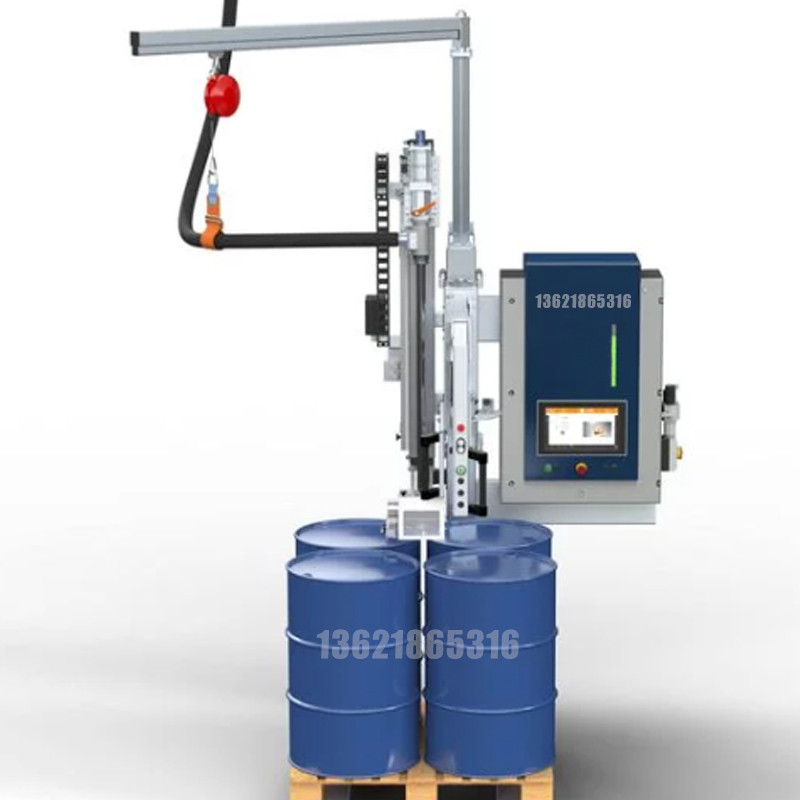
Fully automatic filling lines deliver high-speed mass production, yet they come with hefty upfront investment, fixed line layouts, and rigid SKU switching limits that burden small factories, startup workshops, and customized production enterprises. Most full-auto fillers require standardized bottle sizes, fixed material formulas, and long-run batch production to justify costs, making them inefficient for frequent product updates, trial production, and small-batch customized orders. On the contrary, pure manual filling suffers from low productivity, inconsistent dosing accuracy, and high labor dependency. This Google E-E-A-T compliant SEO article focuses exclusively on semi-automatic filling machines, a flexible, budget-friendly filling solution never covered in previous guides, perfectly bridging the gap between inefficient manual operation and high-cost full-automatic filling systems.
Semi-automatic filling machines are versatile human-machine collaborative filling equipment designed for flexible industrial liquid and paste packaging. Unlike fully automated lines that realize unmanned full-process operation, this equipment combines mechanical precision filling with manual container placement and collection. It retains core precision metering functions while abandoning rigid fully automated conveying and sorting structures, greatly reducing equipment costs and site requirements. Adaptable to liquids, pastes, and granular mixtures with diverse viscosities, it supports fast specification switching, trial production, and mixed SKU batch processing. With simple operation, small footprint, and low maintenance thresholds, semi-automatic fillers have become the preferred automation solution for small and medium-sized manufacturing enterprises worldwide.
Working Principle of Semi-Automatic Filling Machines
Semi-automatic filling equipment adopts collaborative manual positioning and mechanical quantitative filling logic, featuring a flexible working mechanism different from all fully automatic filling models. Core components include precision metering cylinders, adjustable filling control panels, anti-drip nozzles, pneumatic or electric driving modules, and foot switch induction devices.
During operation, workers manually place empty containers steadily under the filling nozzle to complete positioning, eliminating automated conveying and positioning system limitations. Operators trigger the filling process via foot switches or touch buttons, making the machine execute fixed-quantity filling automatically. The built-in precision metering system controls filling volume strictly, with adjustable parameters for different product specifications. Once the preset dosage is reached, the machine stops feeding instantly and closes the anti-drip nozzle to avoid material leakage. Workers replace filled containers manually to start the next cycle. This flexible collaborative mode combines mechanical filling accuracy with manual layout freedom, adapting to irregular containers and diverse production demands that full-auto machines cannot handle.
Unique Core Industrial Advantages
Professional semi-automatic filling design delivers irreplaceable strengths for flexible small-batch production:
Ultra-High Production Flexibility. It adapts to irregular bottles, special-shaped containers, and frequently switched product formulas without mold replacement or line debugging, ideal for customized and trial production.
Low Investment & Fast ROI. Without complex automated conveying and sorting components, the equipment cost is far lower than full-auto lines. It requires no professional workshop transformation, enabling rapid production launch and quick cost recovery.
Stable Filling Precision. Mechanical quantitative filling completely avoids manual weighing errors, ensuring consistent batch quality and eliminating product overfilling or underfilling defects.
Simple Operation & Low Threshold. Intuitive parameter adjustment and foot switch control require no professional technical training. Ordinary workers can master operation in minutes, reducing enterprise training costs.
Minimal Maintenance & Space-Saving. Compact integrated structure occupies little workshop space, with fewer wearable parts. Daily cleaning and maintenance are simple, greatly reducing long-term operational costs.
Key Industrial Application Scenarios
Semi-automatic filling machines cover diversified flexible production scenarios across multiple industries:
Cosmetic & Skincare Industry: Small-batch essences, mud masks, facial creams, and trial-pack skincare products with frequent formula updates.
Small-Batch Food Production: Specialty sauces, handmade honey, flavored syrups, and limited-batch condiments with diverse packaging specifications.
Pharmaceutical & Health Industry: Small-dose medicinal liquids, health supplements, and herbal extracts requiring precise customized dosing.
Fine Chemical & Daily Chemical Sector: Specialty cleaning agents, industrial additives, and customized perfume liquids for small-batch order processing.
Technical Limitations & Selection Guidelines
Semi-automatic filling machines have clear application boundaries. They rely on manual auxiliary operation, so the overall efficiency is lower than fully automatic lines, making them unsuitable for ultra-large-batch mass production. They are not designed for ultra-high-speed assembly line operations and excel at flexible, low-volume, high-precision customized production.
Common Industry Misconceptions
Many manufacturers assume semi-automatic machines have unstable quality. Independent mechanical metering systems ensure consistent precision for every filling cycle, with quality far more stable than pure manual work. Others believe manual operation increases labor costs; its ultra-low equipment investment and zero debugging costs offset labor input, bringing higher comprehensive benefits for small-batch production.
Conclusion
Semi-automatic filling machines perfectly solve the high-cost rigidity of full-automatic fillers and the low-quality flaws of pure manual filling. With outstanding flexibility, low investment threshold, stable precision, and simple operation, it meets the small-batch, multi-SKU, and trial production demands of startups and medium and small manufacturing enterprises. For factories focusing on customized orders and flexible batch production, the semi-automatic filling machine is the most cost-effective and practical automated filling solution.


