

Gravity Filling Machine: Low-Cost High-Stability Liquid Filler for Free-Flowing Products
2026-08-24 08:40:59
admin
0
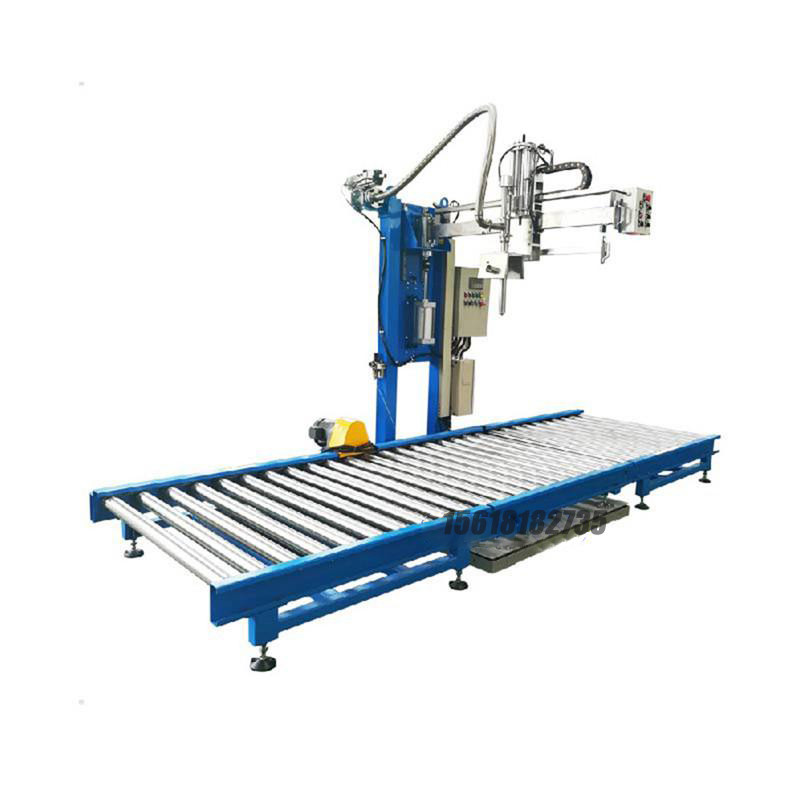
Many industrial filling lines over-rely on complex servo, piston, or pressure-driven filling systems, which bring unnecessary high investment, complicated maintenance, and excessive energy consumption. High-precision professional fillers are designed for special viscous, carbonated, or sterile materials, yet most daily industrial liquids are low-viscosity, free-flowing fluids that do not require sophisticated mechanical metering. Over-equipping ordinary liquid production lines leads to increased operational costs, longer downtime, and lower return on investment. Meanwhile, low-end manual filling equipment causes unstable quality and low productivity. This Google E-E-A-T compliant SEO article focuses exclusively on gravity filling machines, a cost-effective, high-reliability filling solution never covered in our previous guides, optimized for standard free-flowing liquid mass production.
Gravity filling machines are basic yet highly efficient industrial liquid filling devices that leverage natural gravitational flow to complete container filling. Different from positive-displacement, pressure-balanced, or sensor-driven intelligent fillers, this equipment adopts a pure gravity feeding mechanism with simple mechanical and electrical integration. It uses height difference between the upper material tank and filling nozzles to drive liquid flow, controlling filling volume and speed through precise valve opening time and flow adjustment. Designed for non-viscous, non-carbonated, and foam-resistant free-flowing liquids, gravity fillers feature ultra-simple structure, stable long-term operation, and almost zero material waste. They serve as the most practical cost-saving filling solution for standardized, large-batch ordinary liquid production in global manufacturing industries.
Working Principle of Gravity Filling Machines
Gravity filling systems adopt natural differential pressure flow and time-based quantitative filling logic, with a minimalist operating mechanism completely different from all mechanical forced filling equipment. Core components include high-level material storage tanks, anti-clog filling nozzles, pneumatic control valves, flow adjustment modules, photoelectric bottle sensors, and PLC timing control systems.
During formal operation, liquid materials are stably stored in the elevated tank to maintain constant water pressure. When photoelectric sensors detect qualified containers in place, the system automatically opens the filling valves. Driven by gravity, liquid flows down steadily through the nozzles into containers at a regulated uniform speed. The PLC system precisely records valve opening duration to control filling volume accurately. Once reaching the preset time and dosage standard, the valves close instantly to stop liquid output. The entire filling process depends on stable height difference and timing calibration, avoiding mechanical extrusion, pressure fluctuation, and sensor drift errors, ensuring consistent and repeatable filling results for every batch.
Core Advantages Over Complex Fillers
Professional gravity timing filling design delivers unique practical strengths for ordinary liquid production:
Ultra-Low Operational Costs. The gravity-driven structure requires no high-power motors, servo systems, or pressure devices, greatly reducing daily power consumption and long-term operational expenses for factories.
Extreme Operational Stability. With fewer wearable precision parts, gravity fillers avoid frequent failures, sensor drift, and mechanical jams, maintaining stable 24-hour continuous production with minimal downtime.
Simple Maintenance & Cleaning. The open and streamlined pipeline structure has no dead corners, supporting quick disassembly, flushing, and sterilization. Daily maintenance requires only basic inspection, saving labor and time costs.
Zero Liquid Squeezing & Deformation. Natural gravity flow produces no shear force or mechanical extrusion, protecting mild liquid ingredients and maintaining original liquid properties completely.
High Cost-Performance ROI. Low equipment investment paired with high batch output creates outstanding return on investment, especially suitable for medium and large-scale standardized liquid production lines.
Key Industrial Application Scenarios
Gravity filling machines are widely applied in free-flowing liquid industrial production across multiple fields:
Beverage Industry: Purified water, mineral water, plain tea drinks, and non-carbonated fruit juice with stable fluidity.
Daily Chemical Industry: Disinfectant, purified cleaning water, diluted detergent, and transparent fragrance-free liquid products.
Fine Chemical Industry: Low-viscosity industrial solvents, diluted chemical solutions, and non-corrosive liquid raw materials.
Food Processing Industry: Edible vinegar, light soy sauce, and thin liquid seasonings with stable flow characteristics.
Technical Limitations & Selection Guidelines
Gravity filling machines have clear application boundaries. They are only suitable for low-viscosity free-flowing liquids and cannot process thick pastes, high-oil fluids, particle-containing materials, or carbonated foaming liquids. Time-based metering is suitable for standard mass production but not for ultra-high-precision micro-dose filling scenarios.
Common Industry Misconceptions
Many manufacturers mistakenly believe gravity filling has low accuracy. Modern PLC precise timing and constant-pressure tank calibration ensure stable volume accuracy that fully meets industrial retail standards. Others think simple equipment means low efficiency; multi-head parallel filling design supports high-speed batch output, matching large-scale production demands perfectly.
Conclusion
Gravity filling machines fill the market gap in cost-effective and ultra-stable standardized liquid filling, solving excessive investment and complex maintenance problems of over-sophisticated filling equipment. With gravity-driven stable flow, low energy consumption, easy maintenance, and reliable batch consistency, it perfectly adapts to various free-flowing liquid production needs. For manufacturing enterprises pursuing stable output, refined cost control, and long-term low-failure operation, the gravity filling machine is the most cost-efficient and practical automated filling solution.


