

Semi-Automatic Filling Machine: Cost-Effective Precision Filling for Small-Batch & Custom Production
2026-08-21 08:44:49
admin
0
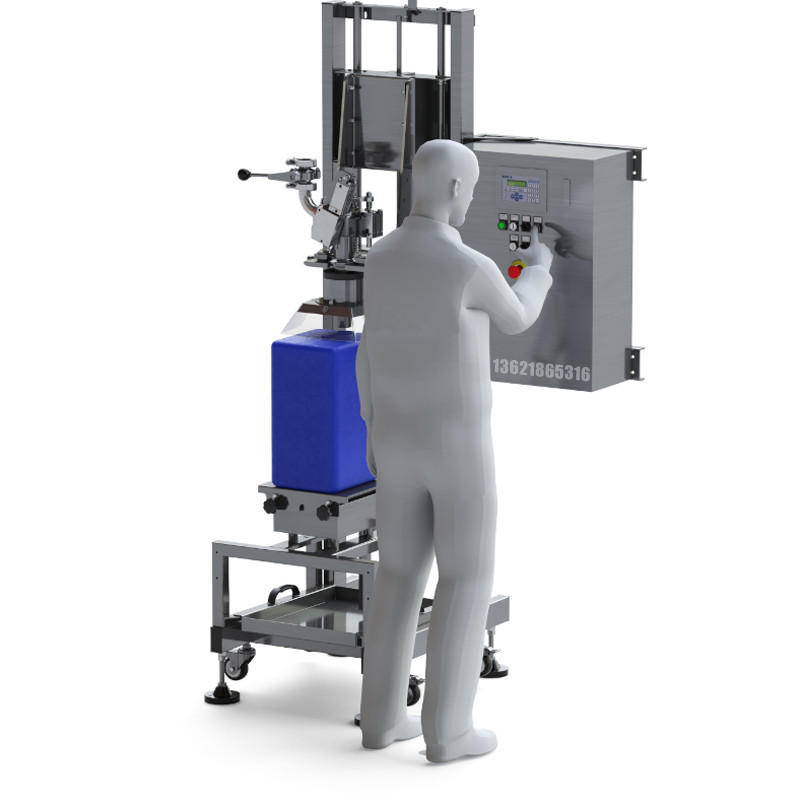
Fully automatic filling lines dominate large-scale industrial production, yet they often prove overpriced, inflexible, and overly complex for small manufacturers, startup factories, and custom batch producers. High-speed automated fillers require substantial upfront investment, fixed line layouts, and long setup times, making them unsuitable for frequent formula changes, low-volume orders, and trial production runs. Many food, cosmetic, and chemical SMEs struggle with a critical gap: manual filling is cheap but inaccurate and unhygienic, while full-auto lines are unaffordable and rigid. This Google E-E-A-T compliant SEO article focuses exclusively on semi-automatic filling machines, a versatile mid-tier filling solution never covered in our previous equipment guides. Balancing manual flexibility and mechanical precision, it delivers reliable, adjustable filling for diverse low-to-medium batch production scenarios.
Semi-automatic filling machines serve as the ideal transitional solution bridging manual labor and full automation. Unlike fully automated systems that rely on integrated conveyor belts, automatic bottle sorting, and unmanned operation, semi-auto fillers combine mechanical metering and manual bottle placement, retaining production flexibility while eliminating human-induced dosage errors. Designed with simplified structural layouts and intuitive control systems, these machines require minimal training, lower power consumption, and far less maintenance than complex industrial filling lines. They excel at handling frequent product switching, irregular container types, and customized small-batch orders that full-auto equipment cannot process efficiently, making them a staple for flexible manufacturing workshops worldwide.
Working Principle of Semi-Automatic Filling Machines
Semi-automatic filling machines adopt human-machine collaborative quantitative filling logic, with a unique operating model distinct from all fully automatic pump, gravity, and pressure filling systems. Core components include precision metering pumps or piston cylinders, adjustable stroke control panels, foot switch triggers, anti-drip nozzles, and stainless steel material tanks. The entire workflow divides manual auxiliary positioning and mechanical quantitative filling clearly.
During operation, workers manually place empty bottles or containers directly under the filling nozzle to complete positioning, eliminating the need for automated conveyor and sorting systems. After confirming stable placement, operators activate the filling cycle via a foot pedal or manual button. The machine executes fixed-quantity mechanical filling automatically, with preset volume, speed, and dosage parameters to ensure consistent output. Once the single filling cycle is completed, the nozzle closes instantly to prevent dripping. Workers then replace the filled container with an empty one for the next cycle. All metering processes are mechanically controlled, while container positioning and replacement rely on manual operation, achieving a perfect balance of flexibility and precision.
Core Advantages Over Full-Auto Lines & Manual Filling
Professional semi-automatic filling design delivers unique practical advantages for flexible industrial production:
Ultra-Low Investment & Fast ROI. Without complex conveyor and automated sensing modules, the equipment features low procurement costs, zero layout transformation fees, and short return cycles, perfectly fitting SME budget demands.
Unmatched Production Flexibility. Manual container placement supports irregular bottles, special-shaped jars, and customized packaging sizes that full-auto lines cannot adapt to, enabling rapid multi-SKU switching.
Stable Filling Precision. Mechanical quantitative metering eliminates the dosage deviation and instability of pure manual filling, ensuring commercial-grade consistent batch quality.
Simple Operation & Low Maintenance. Intuitive parameter adjustment and simplified mechanical structure reduce failure rates. Workers can master operation and daily maintenance within hours without professional technical support.
Wide Material Compatibility. Versatile models adapt to liquids, pastes, low-viscosity oils, and particle-containing mild fluids, covering food, cosmetic, and chemical small-batch production needs.
Key Industrial Application Scenarios
Semi-automatic filling machines are widely applied in flexible low-to-medium volume production scenarios:
Small-Batch Food Production: Craft sauces, specialty honey, homemade condiments, and trial-size beverage products for boutique food factories.
Custom Cosmetic Manufacturing: Premium essential oils, handmade skincare creams, and customized trial cosmetic batches with variable packaging specifications.
Laboratory & Pilot Production: Reagent filling, formula testing, and new product trial runs requiring frequent parameter adjustment and batch switching.
Fine Chemical Small-Batch Processing: Custom additives, mild cleaning solutions, and specialty industrial liquids with non-standard packaging requirements.
Technical Limitations & Selection Guidelines
Semi-automatic filling machines have clear application boundaries. They depend on manual operation, so they cannot meet ultra-high-volume mass production demands of large factories. Production efficiency is lower than fully automatic assembly lines. They are the optimal choice for startups, small workshops, and enterprises focusing on customized and trial production rather than high-volume output.
Common Industry Misconceptions
Many manufacturers assume semi-auto machines have unstable accuracy. Modern calibrated piston and pump metering systems deliver fixed precision equivalent to industrial standards, far exceeding manual filling consistency. Others believe manual operation increases labor costs; low equipment investment and zero debugging downtime offset labor expenses, achieving higher overall cost performance for small batches.
Conclusion
Semi-automatic filling machines fill the market gap between inefficient manual filling and high-cost full-auto filling lines, solving inflexible production, high investment pressure, and poor batch consistency for small and customized manufacturers. With low upfront cost, outstanding multi-product adaptability, simple operation, and reliable metering precision, it perfectly matches small-batch, trial, and custom production demands. For startups, boutique processing factories, and pilot production workshops pursuing flexibility and cost-effectiveness, semi-automatic filling machines are the most practical, low-risk, and high-value automated filling solution.


